

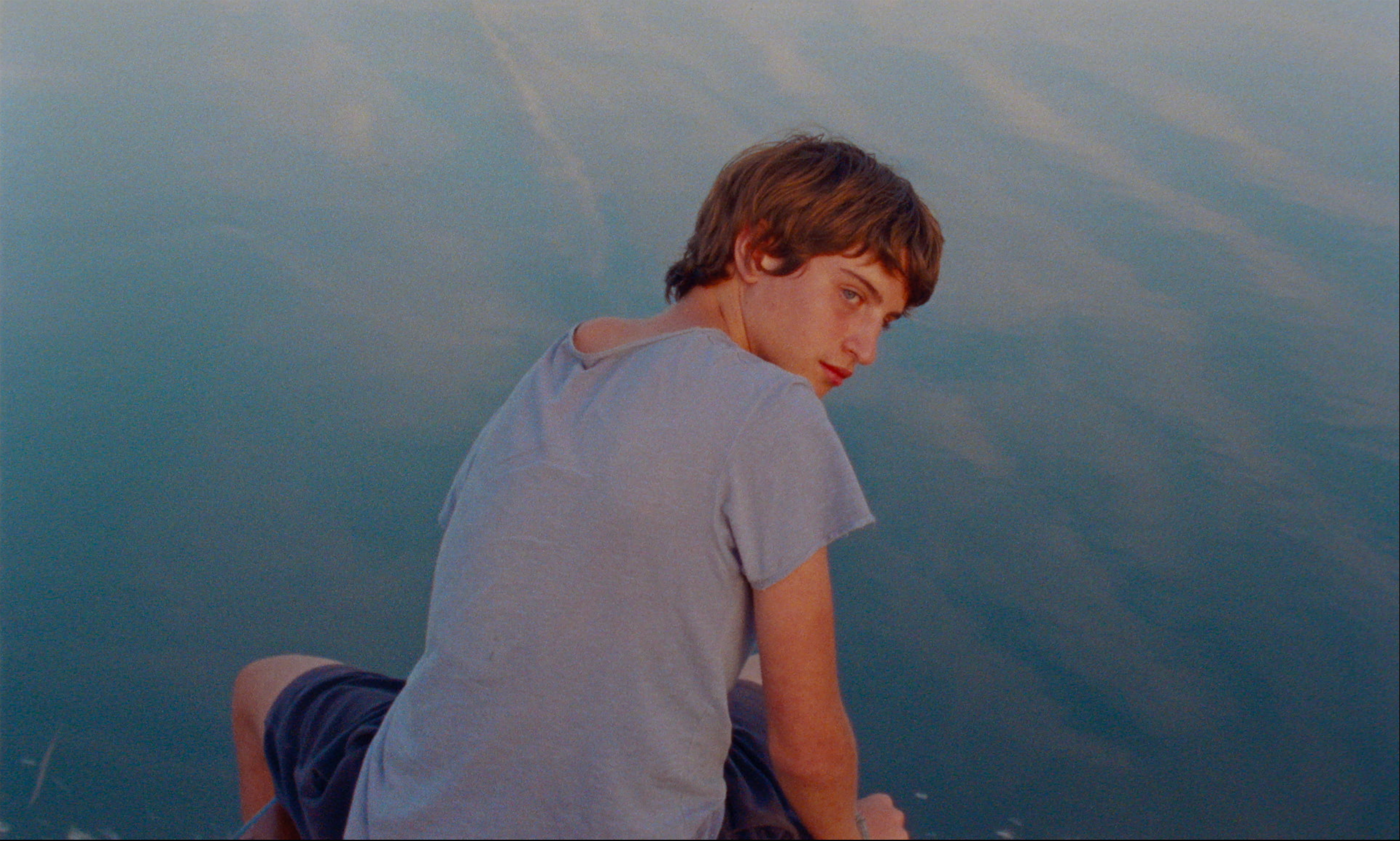
Jaume Claret Muxart, director of Strange River (playing at GFT 29/03 and Filmhouse 30/03) joins us from Barceona to give a free masterclass on filmmaking, open to all with an interest in cinema and film production. It will look at filmmaking from a place of love and enthusiasm, from making films with your friends to your film playing at big festivals like Venice and San Sebastian. Jaume will share working documents from his computer, giving a transparent look at his filmmaking process, looking at topics such as funding, positive set experiences, and overall the way of life behind making cinema.
 Tuesday 31st March
 19.00-20.30
 Teaching Room 07 – Old College, University of Edinburgh, South Bridge, EH8 9YL
Accessibility: All rooms in old college are accessible by lift and we’d suggest using the Chamber Street entrance. Please ring the bell and servitor will open the door and show you to the lift.
Please click below to reserve your free ticket:

About Jaume:
Jaume Claret Muxart’s first feature film, STRANGE RIVER had its world premiere in Venice Orizzonti, followed by the San Sebastian International Film Festival where it participated in the Ikusmira Berriak residency, the screenwriting residency of the Catalan Film Academy, and the WIP at Les Arcs, among others. He was part of the first generation of the Elías Querejeta Zine Eskola (EQZE). Among his filmography, standout short films include ELLA I JO (2020, San Sebastián Film Festival, Rotterdam International Film Festival, Ficunam, IndieLisboa), DIE DONAU (2023, FIDMarseille, Málaga, Seminci), and LA NOSTRA HABITACIÓ (Rotterdam International Film Festival).
Speakng about the cinema he loves, he said:
‘The kind of cinema I most admire when watching and most enjoy when making is that which reflects life, but told through storytelling, through a poetic realism like we find in French cinema of the 1930s — the cinema of the three Jeans: Epstein, Renoir, and Vigo — or in certain works by Agnès Varda, Terence Davies, and in Asian cinema of the 1990s, especially Hou Hsiao-Hsien and Edward Yang. I like to think of cinema as a space where we imagine what could have happened if what didn’t happen had actually occurred.’